Home / Print your own card game
For card game designers
Print the card game you've been designing.
Card types with real fields. Stats from your spreadsheet. Playtest decks with exactly the copies you want, booster packs, and holographic rares, printed on stock that feels like the games you already play.
No minimum order · Ships in 1–2 weeks · US only
Built for a set, not a single card
A game has dozens or hundreds of cards that have to stay consistent while you keep changing them. ShufflePrints is structured for that.
Card types
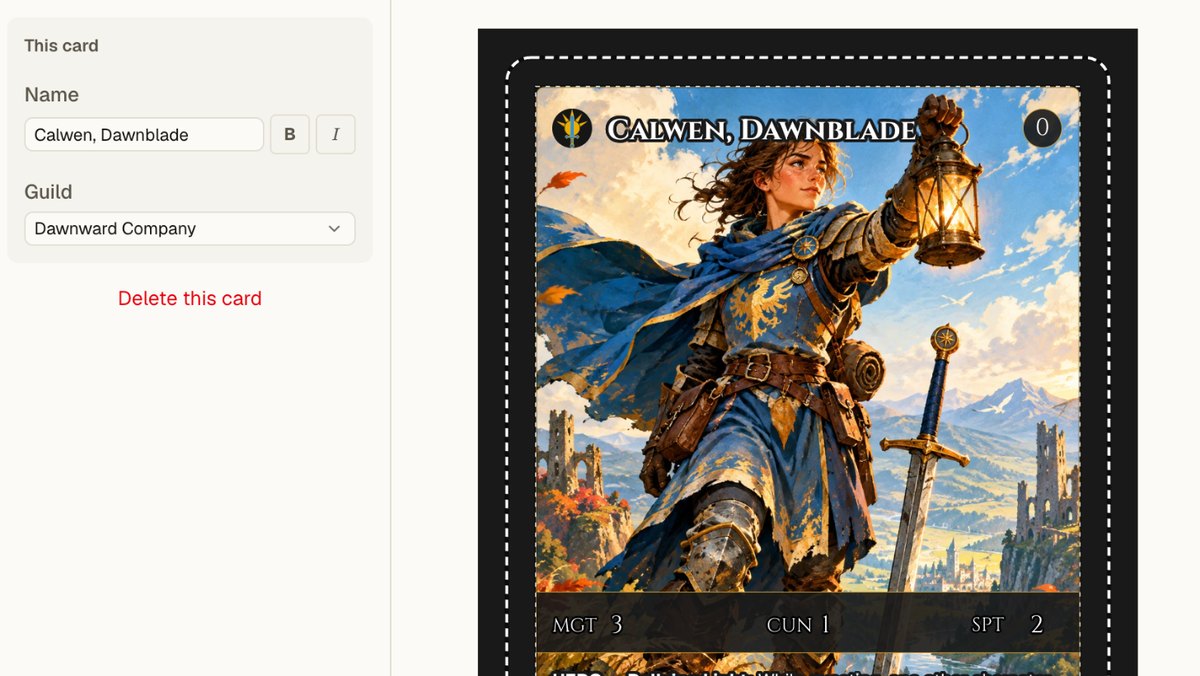
Each type, such as creature, spell or item, is a layout with named fields: name, cost, art, type line, rules text, stats. Every card of that type is drawn from it, so changing the layout changes every card at once.
Shared lists
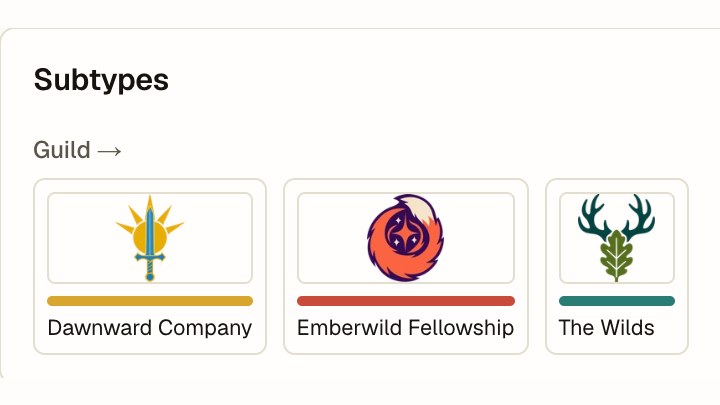
Rarity, element, faction, guild: a list the whole set shares, where each entry carries its own colour, symbol or label. Redraw a guild's mark once and every card in that guild follows. Symbols work the same way: write {Fire} in any rules text, and change the symbol once to change it everywhere.
Your spreadsheet in
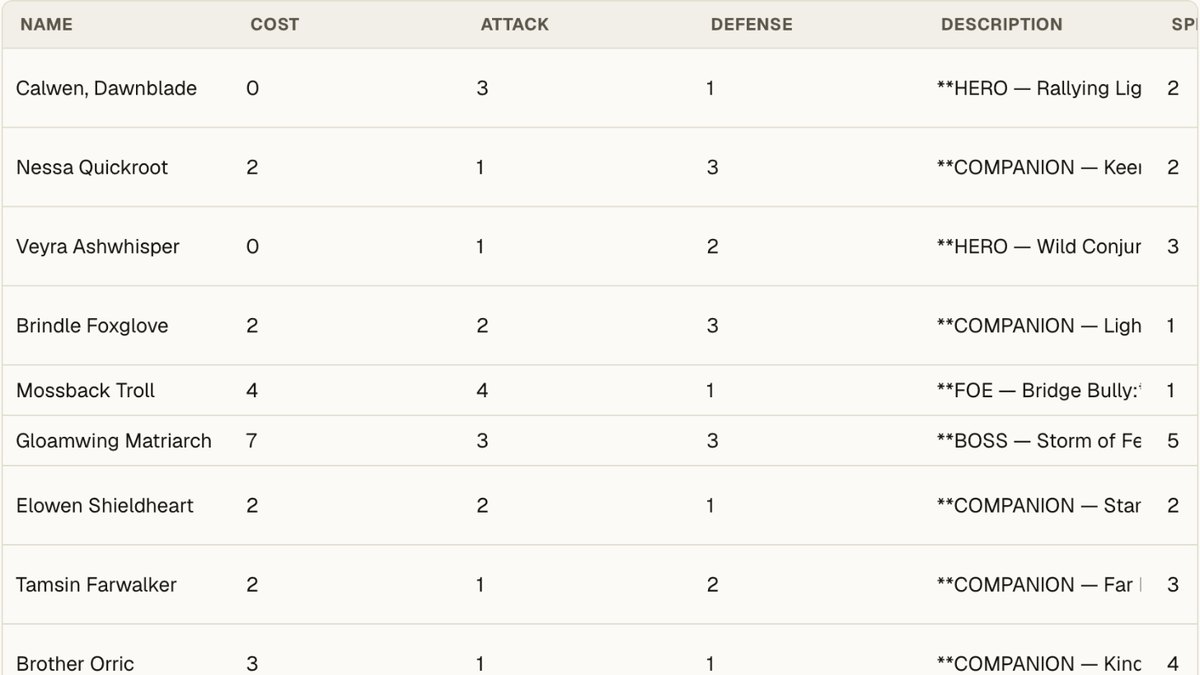
Paste your card list, and the assistant maps the columns onto the layout and creates the cards. Every card's stats and text then sit in one sheet. Or ask: "give every companion +1 Spirit" changes them all at once, and Undo puts them back.
Your art, or drawn for you
Upload your own frames, icons and finished art. No art yet? The assistant can draw it in a style you describe, so a playtest deck doesn't wait on an illustrator.
Example: Crownshards
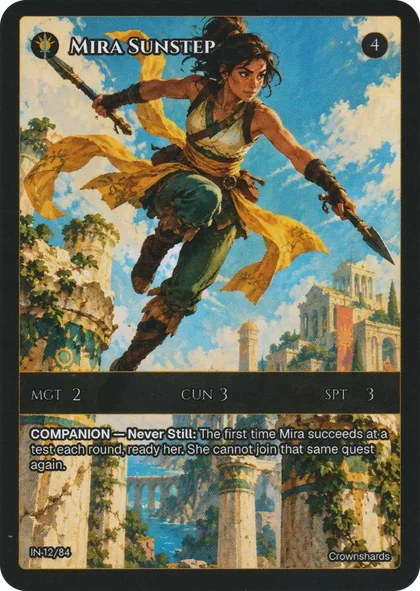
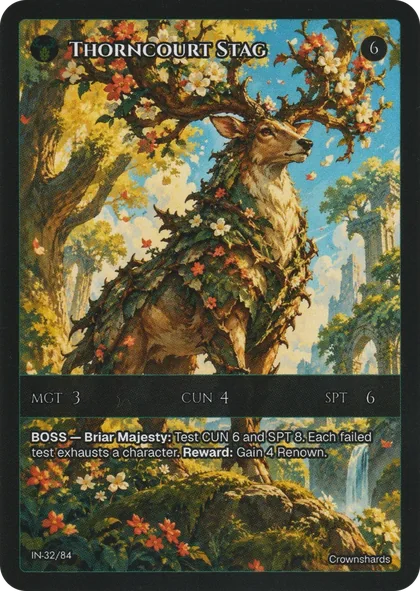
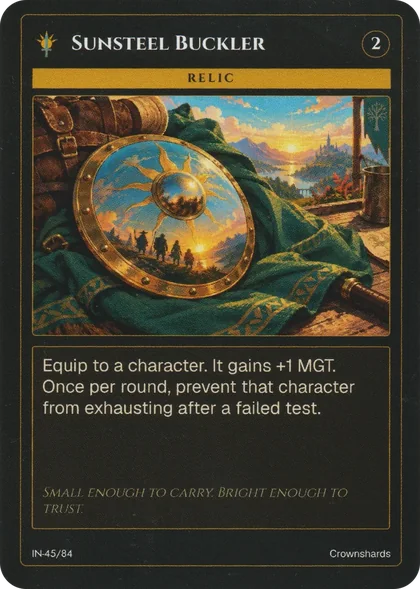
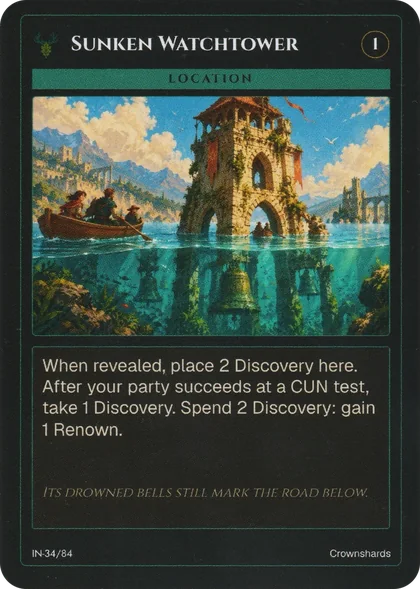
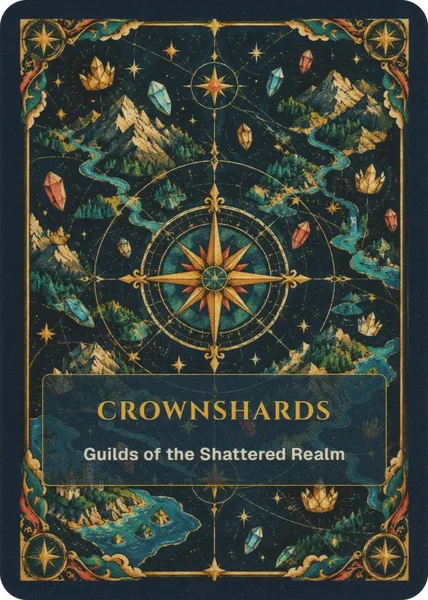
Crownshards: Guilds of the Shattered Realm, an original card game. One layout for companions and bosses, one for relics and locations, each type with its own banner, and one card back for the set.
From first playtest to finished set
Describe the game
Tell the assistant about your card types and what's on them, or start from a trading card layout and adjust it.
Fill the set
Paste your spreadsheet, write cards one by one, or ask the assistant to draft a first batch to react to.
Print a playtest deck
Pick the cards and how many copies of each go in the deck. Order a copy for every playtester.
Change and reprint
Rebalance, rewrite, swap art. The next print uses the latest version of every card.
Printing options that matter for a TCG
| What you need | How it works |
|---|---|
| Starter and playtest decks | Poker-size decks from 18 to 216 cards. Set the copies of each card per deck: four of each common, one of each rare. |
| Booster packs | Sealed foil packs of 18 cards, printed with your pack art. |
| Holographic rares | A holographic front covers every card in a deck, so order your rares as their own holographic deck next to the regular one. |
| The right feel | Standard stock is smooth and about as thick as Pokémon or Magic cards. Compare all four stocks. |
| Corners | Rounded like most TCGs, or square. |
| A box for the set | A custom printed tuck box, sized to the deck and designed in the same editor. See packaging. |
| Enough for a group | Order as many copies of a deck as you need, one for each playtester or a few to sell at a convention. |
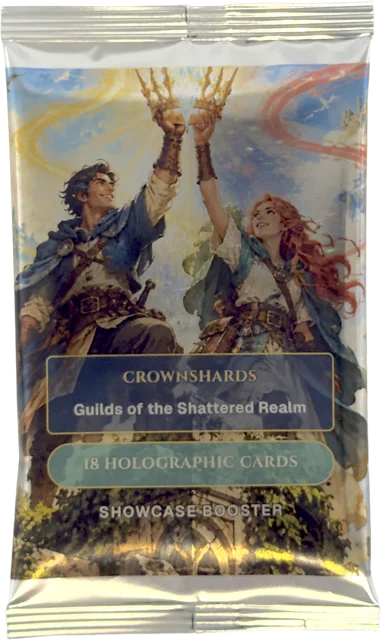
Sealed booster packs
The Crownshards booster: 18 holographic cards sealed in a foil pack printed with the game's art.
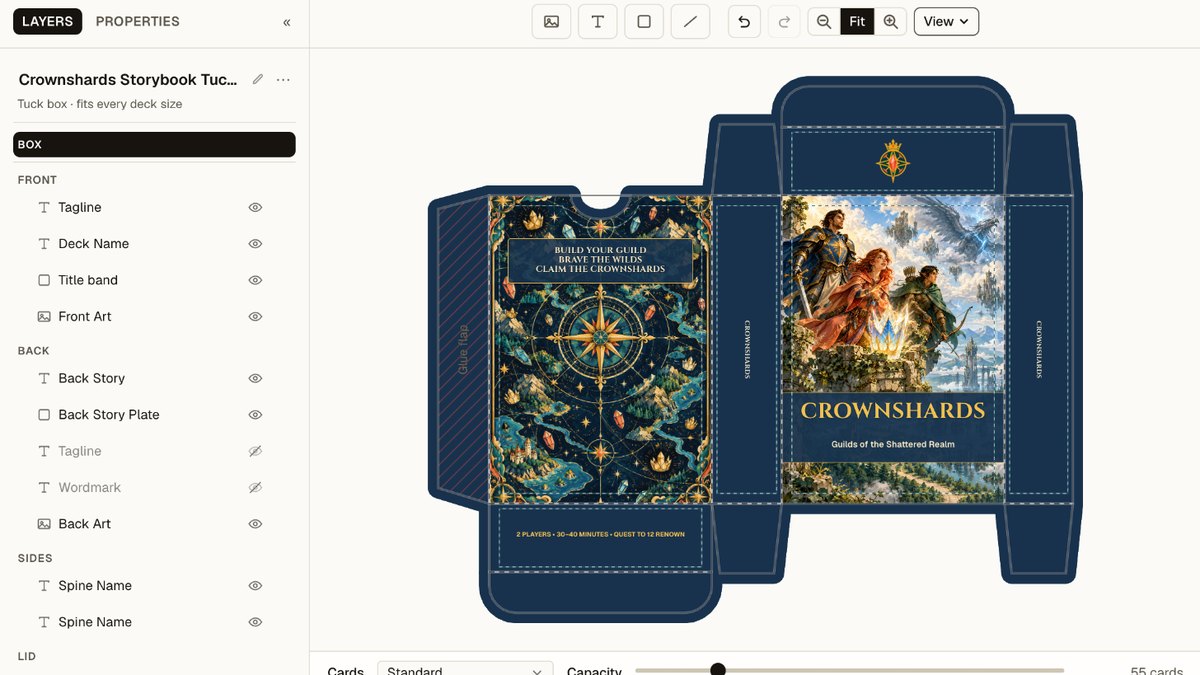
A box to match
Ask for a tuck box or a booster pack and the assistant lays it out from your art, names and marks. Every side is yours to change, and the box is cut for the number of cards in the deck.
Full-bleed art? ShufflePrints prepares the print file for you. What bleed and safe zones mean for your layout.
Things to ask for
- "A two-player TCG about rival alchemists. Card types: reagent, potion and event. Potions have a brew cost and a strength."
- "Here's my card list as a spreadsheet. Make a card for each row, with the Rarity column setting the rarity symbol."
- "I've rebalanced the costs. Update the existing cards from this new sheet."
- "Set up a playtest deck: four copies of each common, two of each uncommon, one of each rare."
Questions
Can I bring my card list from a spreadsheet?
Yes. Paste your spreadsheet into the assistant and it maps the columns onto your card layout: name, cost, type, rules text, stats. It can create new cards from the rows, or update the cards you already have, matched by name.
Can I use my own art and card frames?
Yes. Upload your own art, frames and icons and build the layout around them. If you don't have art yet, the assistant can draw placeholder or finished art in a style you describe.
Can I print several copies of some cards in a deck?
Yes. You choose how many copies of each card go in every deck, so four of each common and one of each rare is a single setting per card. Poker-size decks come in sizes from 18 to 216 cards.
Can only my rare cards be holographic?
A holographic front applies to every card in a deck. To make only the rares shine, order them as their own deck with holographic fronts, alongside a regular deck of the rest.
How does the card stock compare to Pokémon or Magic cards?
Our Standard stock is smooth and about the same thickness as Pokémon or Magic cards. There are three other stocks, including a linen finish that shuffles easily and a thick stock like sports cards.
Can my cards have the same parts as Magic or Pokémon cards?
Yes. A name, a cost, an art box, a type line, rules text and stats are common to almost every card game, and nobody owns them. What belongs to a particular game is its name, logos, symbols, card backs, art and text. Those are out, and we don't print copies of real cards or proxies.